Mon 30 Mar 2026 • Nick Kershaw
Running in Rwanda: What to Expect from Trail Running in the Land of a Thousand Hills
SHARE THIS POST
What's it like to run in Rwanda? Altitude, terrain, climate, routes, and what to expect from trail running through the ridgelines of the Southern Province. A runner's guide.
Rwanda is not flat. That is the first thing to understand.
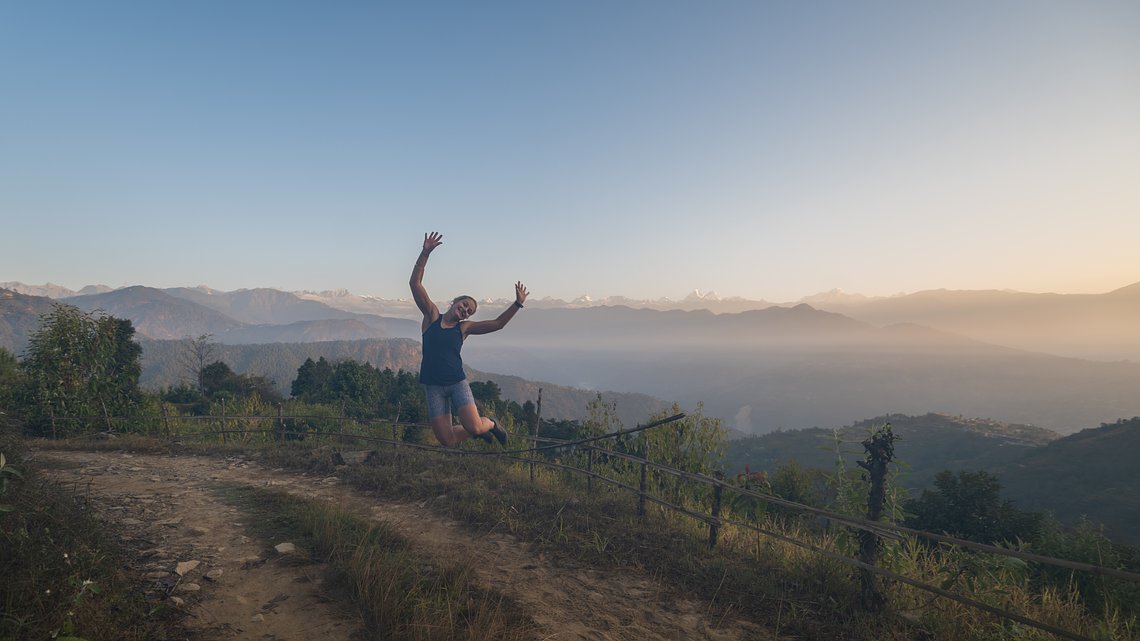
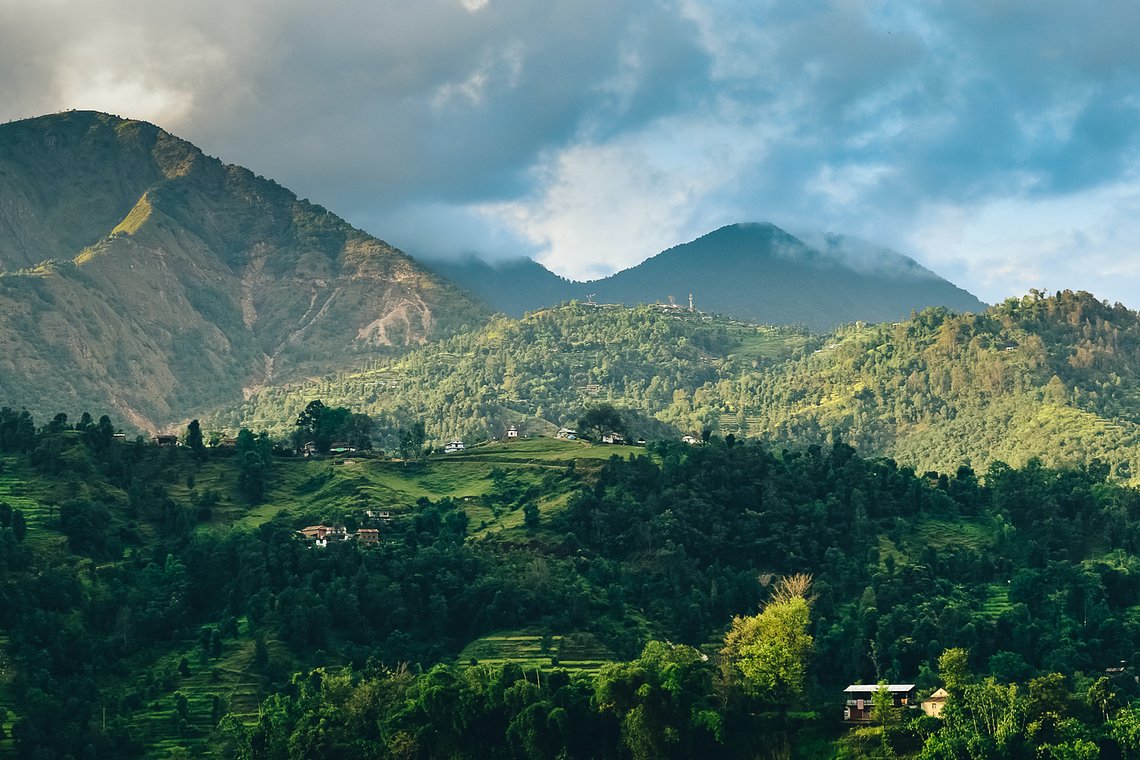
They call it the land of a thousand hills, and once you have seen the Southern Province from a ridgeline with green folds layered into the distance like something a painter would be embarrassed to submit as "too beautiful", you understand that a thousand is probably an undercount.
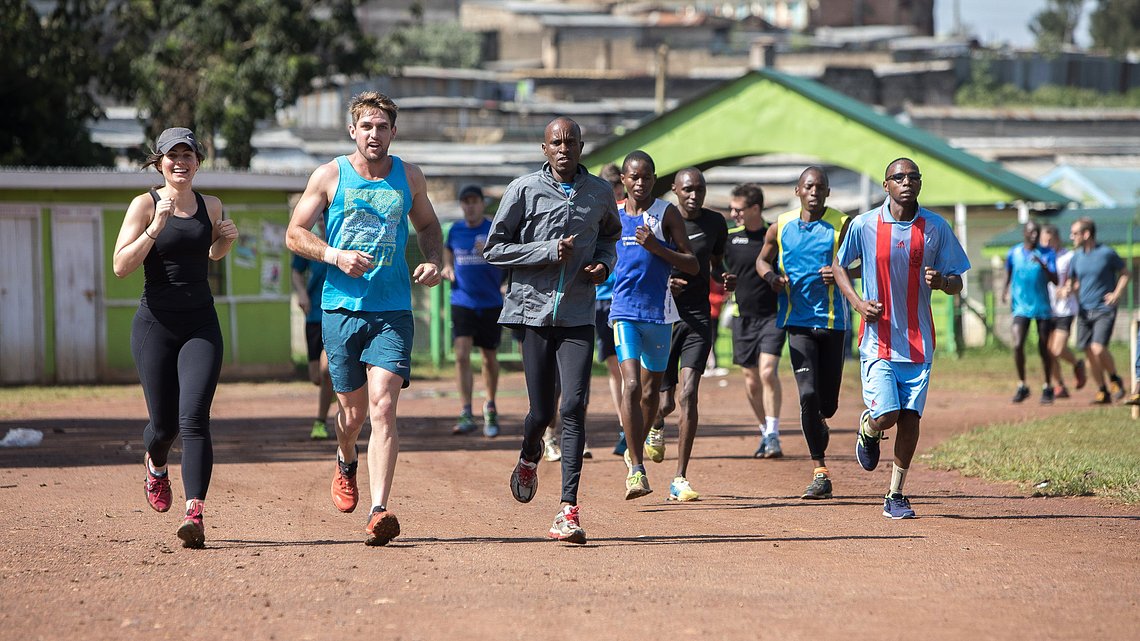
If you are a runner who has been looking for terrain that challenges your legs and rearranges your sense of what running can be, Rwanda belongs on your list. This is not a city marathon, no is this a beach 10km. This is trail running at decent altitude through villages, tea plantations, and red dirt roads that were built to carry tea down from the mountain, not runners up it.
Here is what you need to know.
The terrain
The Southern Province of Rwanda sits between 1,800 and 2,200 metres above sea level. For context, that is roughly the altitude of Mexico City or Bogotá. You will feel it, not aggressively, but steadily. Your lungs will work a little harder. Your pace will be a little slower. And the hills will remind you, constantly, that this country was not designed for flat-course personal bests.
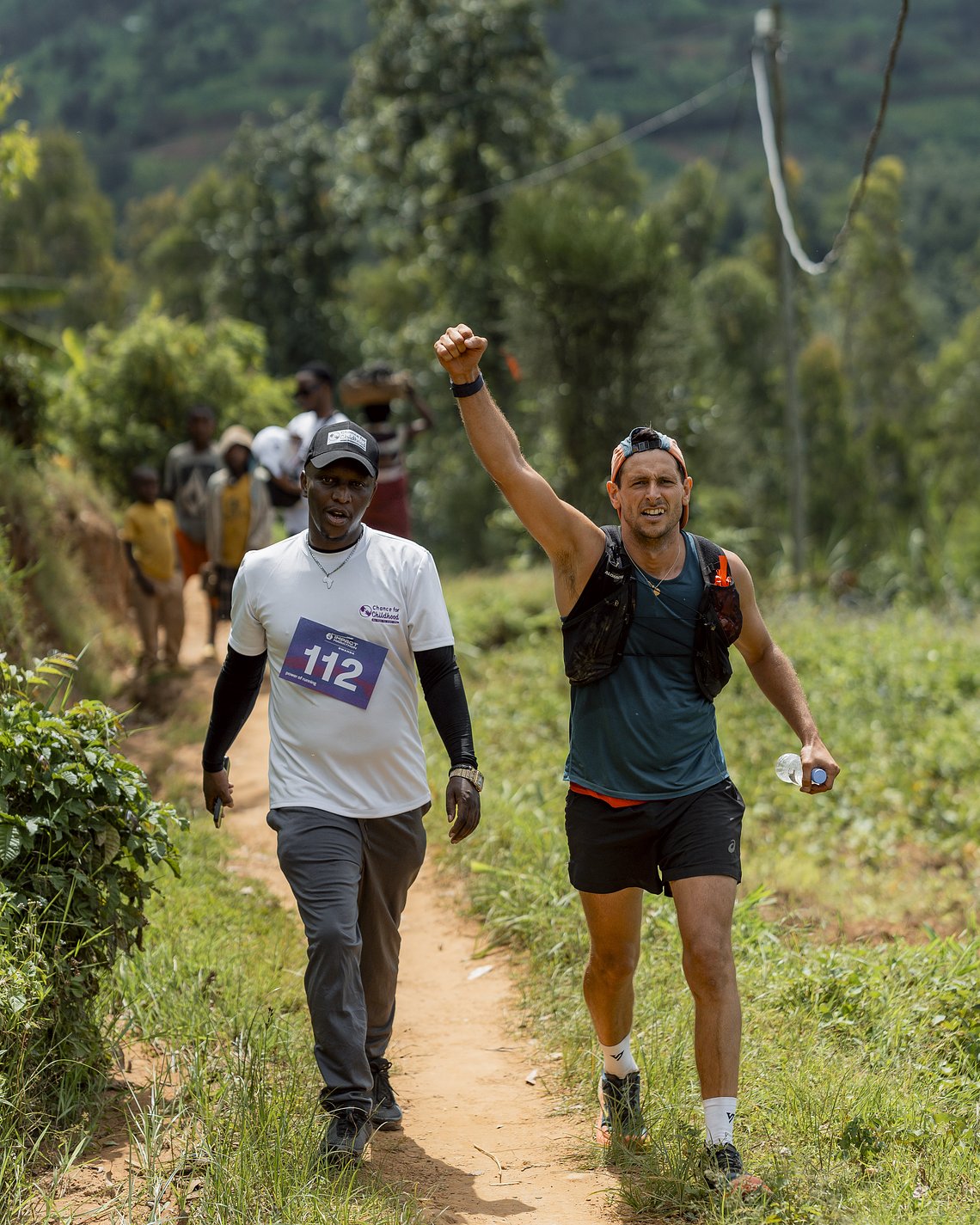
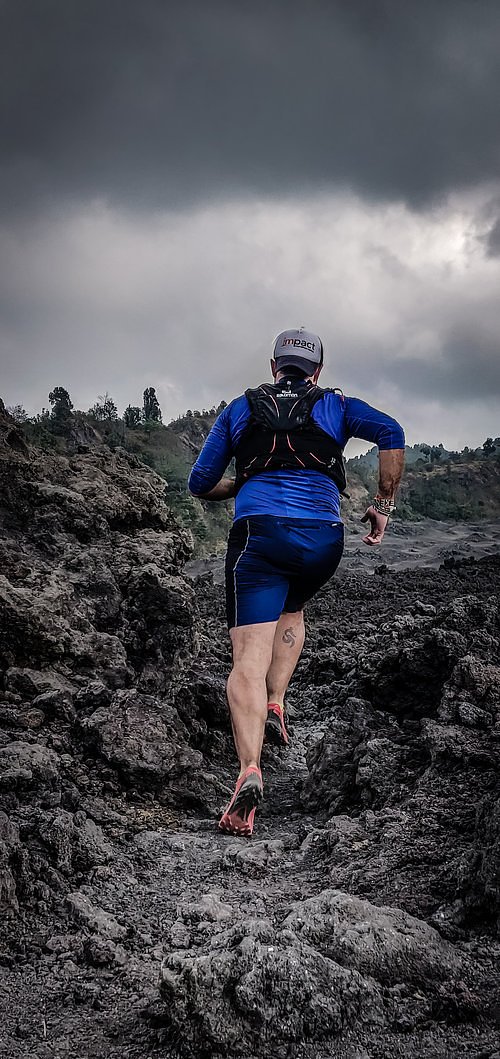
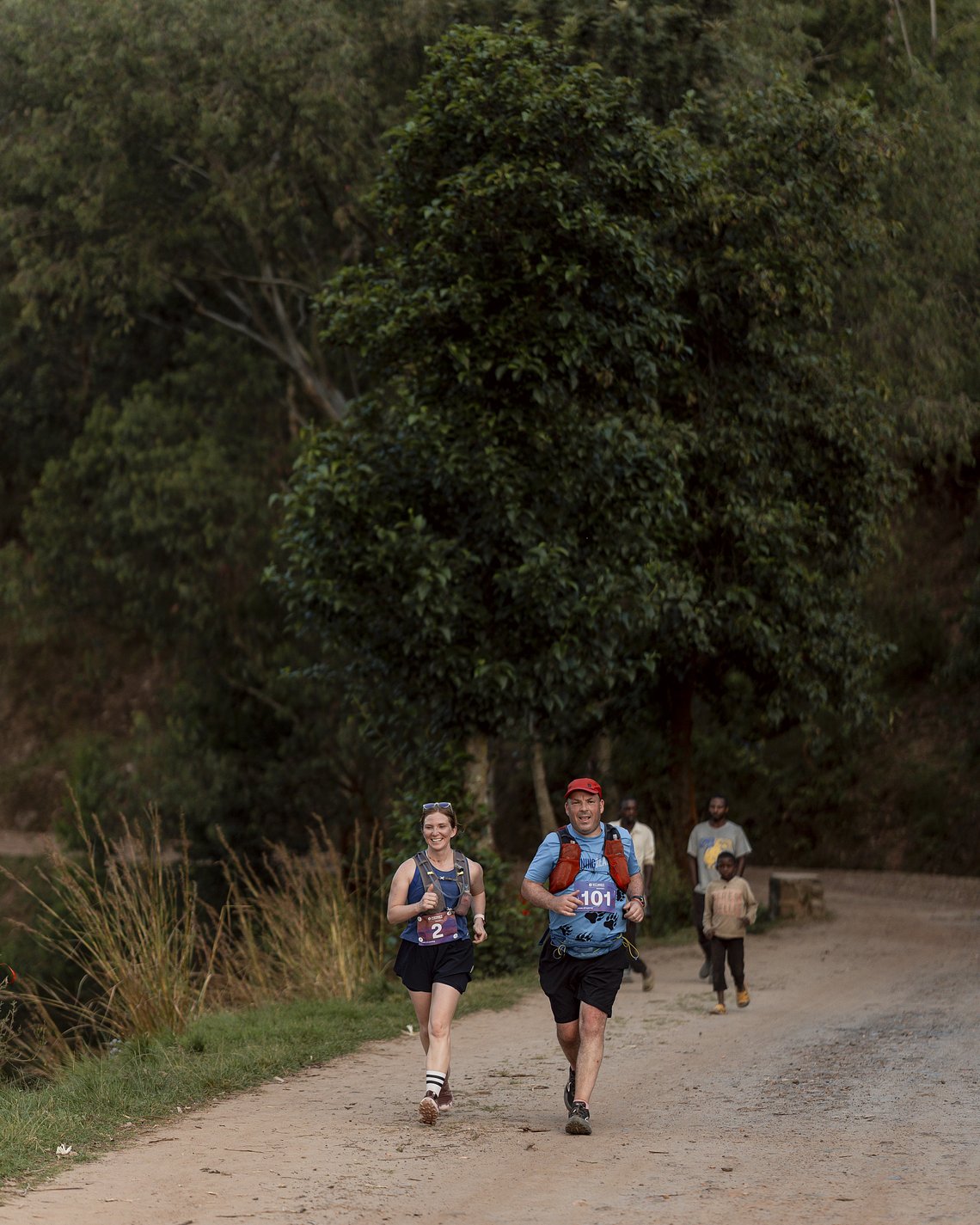
The trails run through a landscape of terraced hillsides, eucalyptus groves, banana plantations, and tea estates. The surface shifts between compacted red dirt roads, loose gravel tracks, and the occasional stretch of tarmac that connects one village to the next. Underfoot, the red laterite soil is firm in the dry season and offers good grip, though the trails are rarely what you would call smooth. Expect undulation, punchy climbs, and descents that test your quads in ways a treadmill never prepared you for.
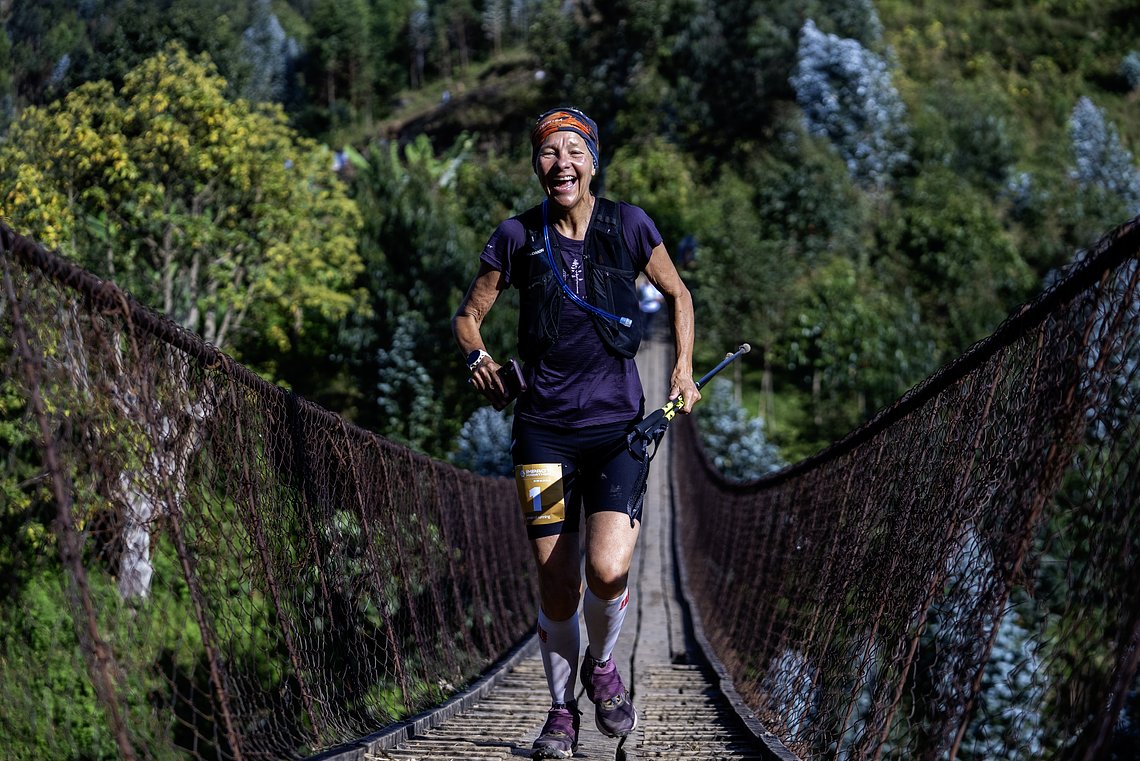
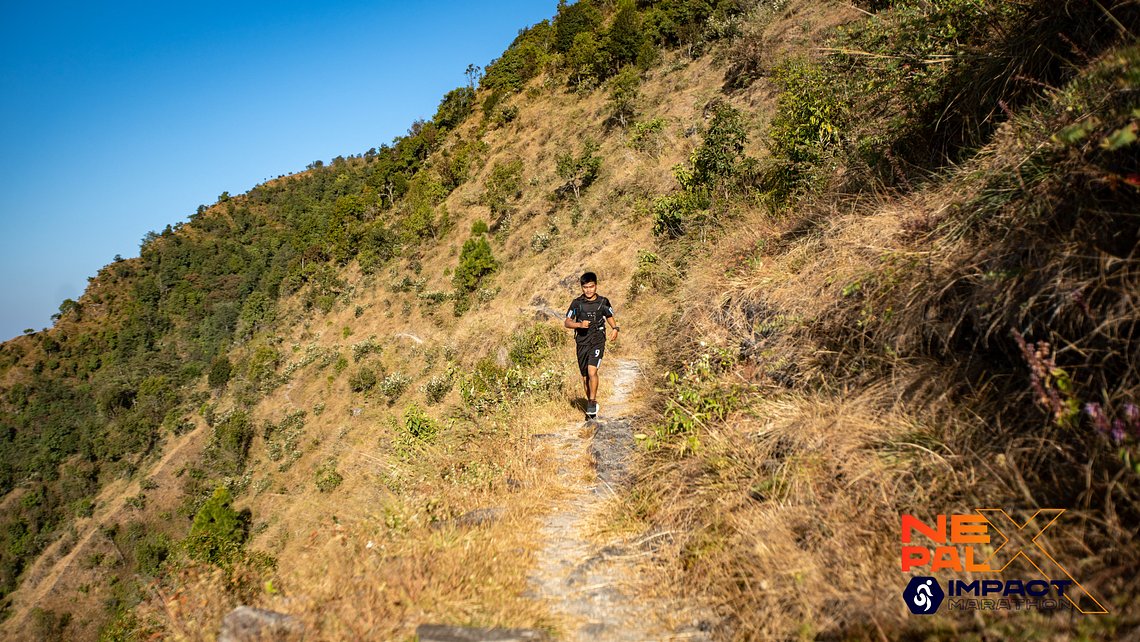
The ridgelines are the defining feature. You will run along the spine of hills with valleys dropping away on both sides, and the views are so persistently extraordinary that you will need to remind yourself to watch your footing. Tea plantations carpet the hillsides in neat geometric rows. Villages appear and disappear as the trail winds through. Children wave, and chase after you. Farmers pause from their work to watch you pass, potentially with a cheer, potentially a quizzical look as to what on earth you are doing. You are running through a living, working landscape, not a packaged trail park.
The altitude
At 1,800 to 2,200 metres, the altitude is noticeable but manageable for most runners. This is not extreme altitude. You will not need supplemental oxygen or specific acclimatisation days. However, having slept, walked, hit up a training run or two, and volunteered at that same altitude for the previous few days, you will find your body is adjusted more than you think. But you will feel the difference, particularly in the first few kilometres before your body settles into a rhythm.
The practical advice is simple: start slower than you think you should. The temptation on race day, with adrenaline and a beautiful descent ahead of you, is to go out hard. Resist it. The altitude will collect its debt in the second half if you overdraw in the first.
If you train at sea level, expect your pace to be roughly ten to fifteen percent slower than your usual. If you are used to running 5:30 per kilometre on a flat road, you might find yourself running 6:15 to 6:30 on the Rwanda ridgelines. That is normal. That is the altitude and the terrain doing their work together.
The climate in June
June is the beginning of Rwanda's long dry season, and it is one of the best months of the year for running in the Southern Province.
Daytime temperatures at altitude sit around 18 to 24°C. Mornings are cool, expect 10 to 14°C at the start line, which means arm warmers or a light layer for the first few kilometres before the sun takes over. By midday, with clear skies and equatorial sunshine, it feels warm and bright. The evenings cool down again quickly once the sun drops.
Rainfall in June is minimal. The Southern Province typically receives less than 20mm for the entire month, compared to over 150mm in the wet season peak of April. You can expect clear days, good visibility across the valleys, and firm trail surfaces. Occasional light cloud cover moderates the temperature and keeps conditions comfortable for running.
The humidity is low by tropical standards, sitting around 55 to 65 percent in June, which makes for pleasant running conditions. There is no oppressive heat. There is no monsoon anxiety. There is just clear air, cool mornings, warm days, and trails that dry out beautifully in the sunshine.
One word on sun protection: you are running close to the equator at altitude. The UV intensity is significantly higher than what most European runners are used to. Make like Baz Luhrmann and wear sunscreen. Wear a cap. Take this seriously.
The distances
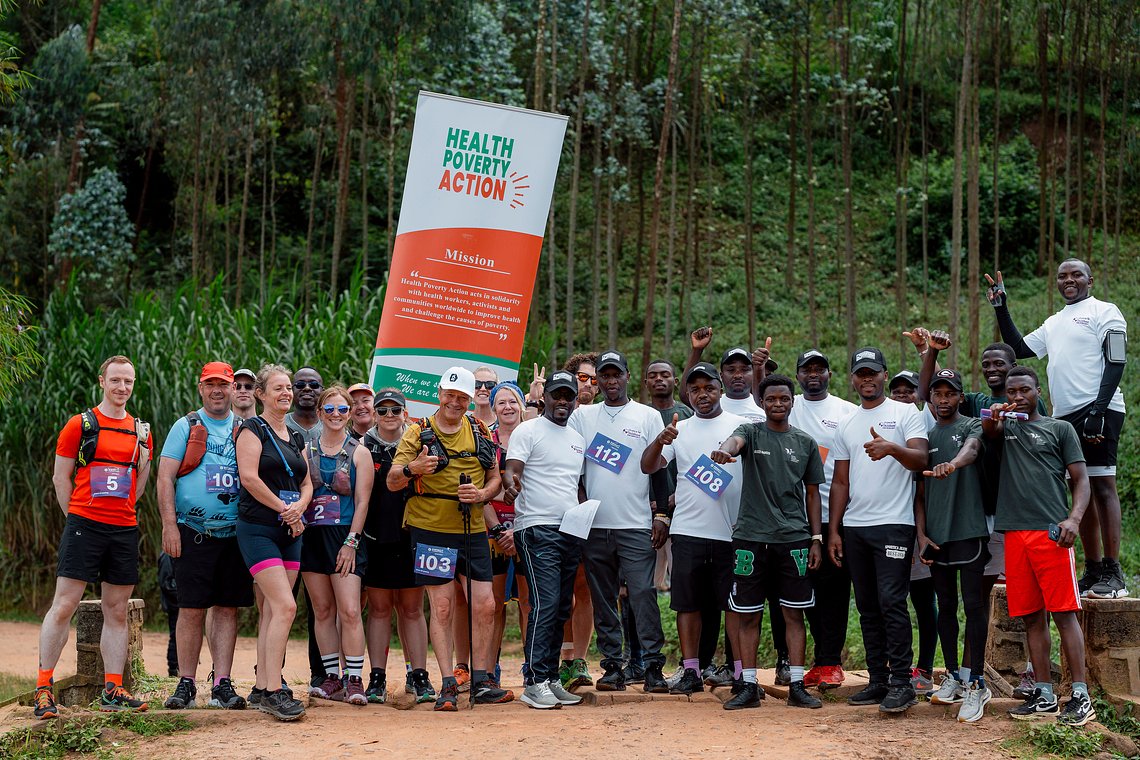
Impact Marathon Rwanda offers three distances: 10km, 21km, and 42km. All three follow the same ridgeline trails through the Southern Province.
The 10km is not a gentle introduction. It is a concentrated taste of the terrain with enough climbing and enough views to understand why people come back to Rwanda to run it again. If you have never run at altitude before, the 10km is a smart choice and nobody will think less of you for it.
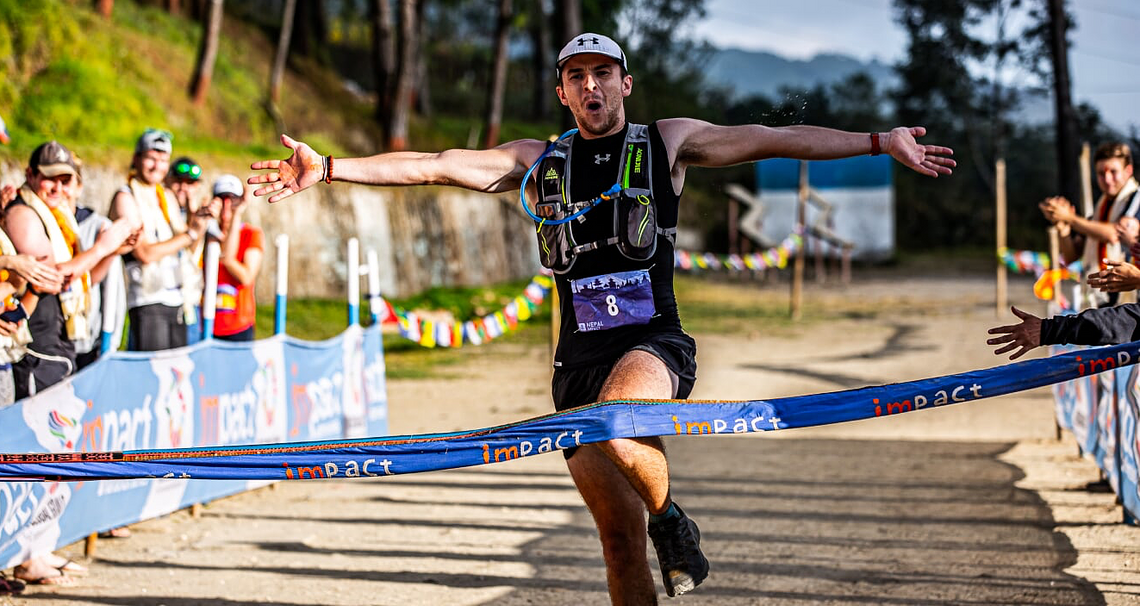
The 21km is the distance most runners choose. It gives you the full ridgeline experience, takes you through villages and tea country, and is long enough to produce that particular exhaustion that comes from running beautiful trails at altitude, the kind of tired that makes you feel more alive, not less.
The 42km is a serious undertaking. A full marathon at this altitude, on this terrain, is not the same as a flat road marathon. Expect it to take significantly longer than your road marathon time. Expect the climbs to test you. Expect the descents to punish your legs. And expect the finish to feel like one of the most earned things you have ever done.
All distances are fully marked with aid stations at least every five kilometres, medical cover on the course, and support vehicles. You are looked after. This is not an unsupported ultra. It is a properly managed trail run in a properly extraordinary place.
What you are running through
This is the part that no race guide can fully prepare you for.
You are running through a country that has rebuilt itself from the ground up. Rwanda's history is present everywhere: in the memorials, in the stories, in the quiet dignity of people who have chosen to move forward, and fronted up to the tough reality that decision required to work. The Genocide Memorial in Kigali, which forms part of the Impact Week before race day, gives context that changes the way you experience everything that follows.
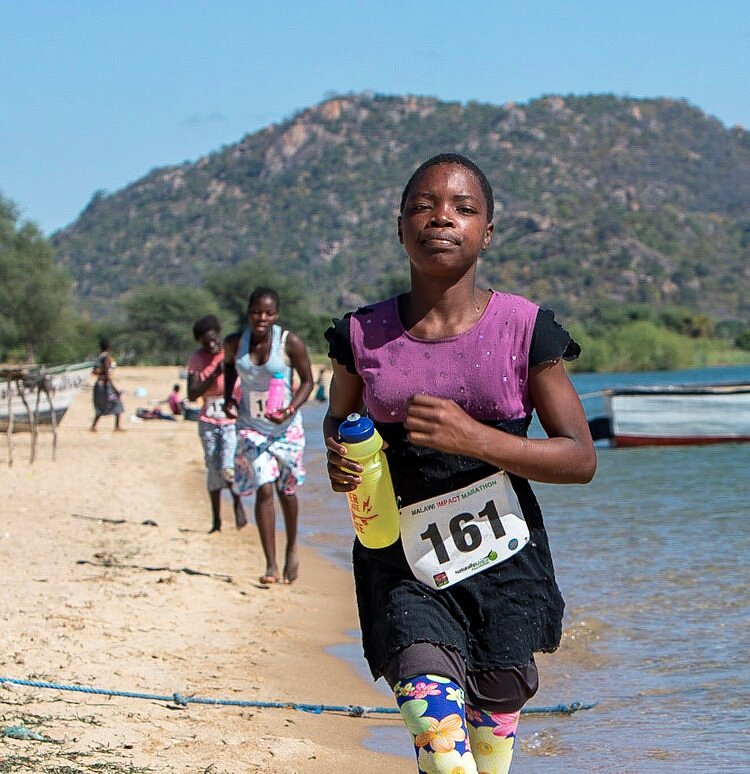
On race day itself, you are running through the daily life of the Southern Province. You pass market towns where hand-carved wooden spoons are laid out on sacking cloth and farmers walk pigs along the same red dirt road you are running on. You pass children heading to school. You pass women carrying baskets on their heads with the effortlessness that makes your running form feel amateur by comparison.
The course is not separate from life, but we've actively created a course that tells a story. And that is what makes running in Rwanda different from almost any other trail race you will find.
The project
Before you run, you build.
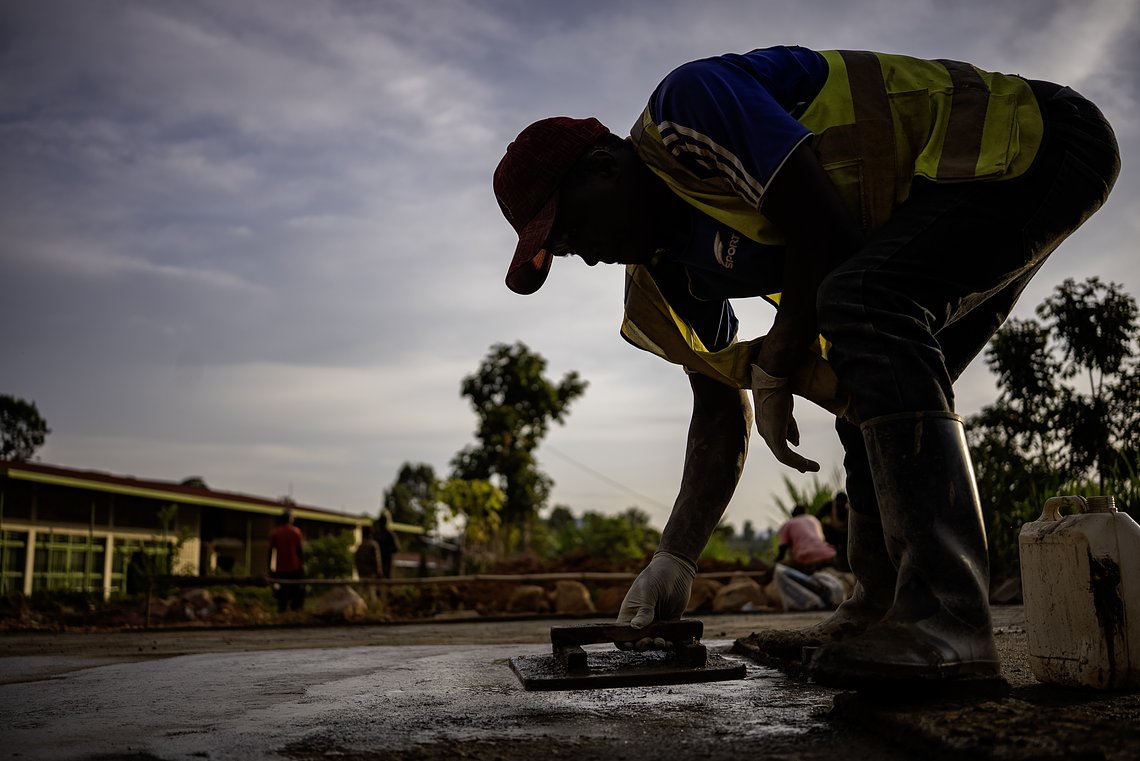
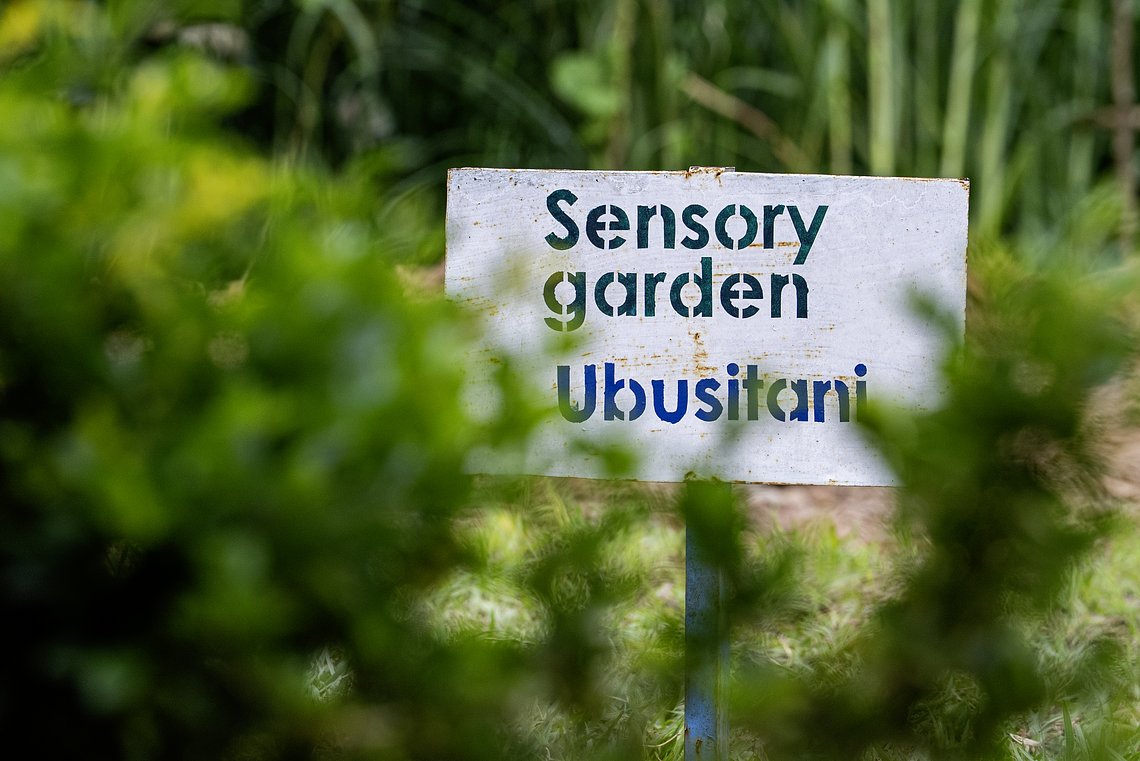
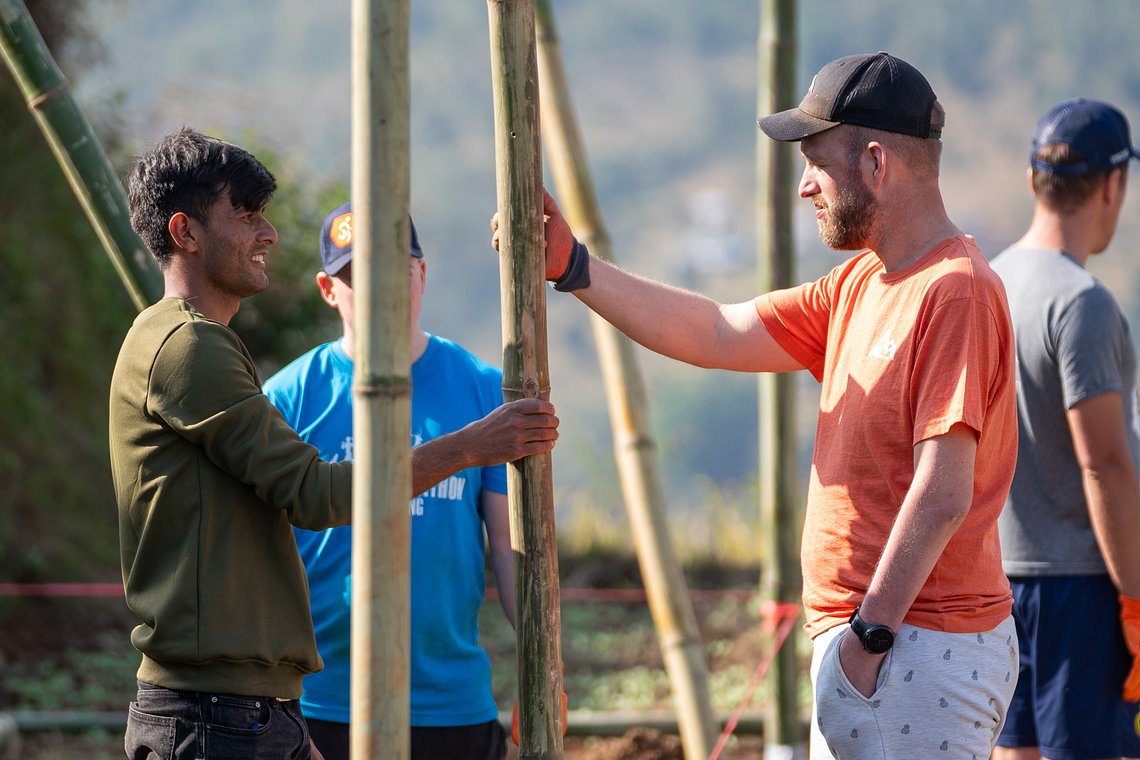
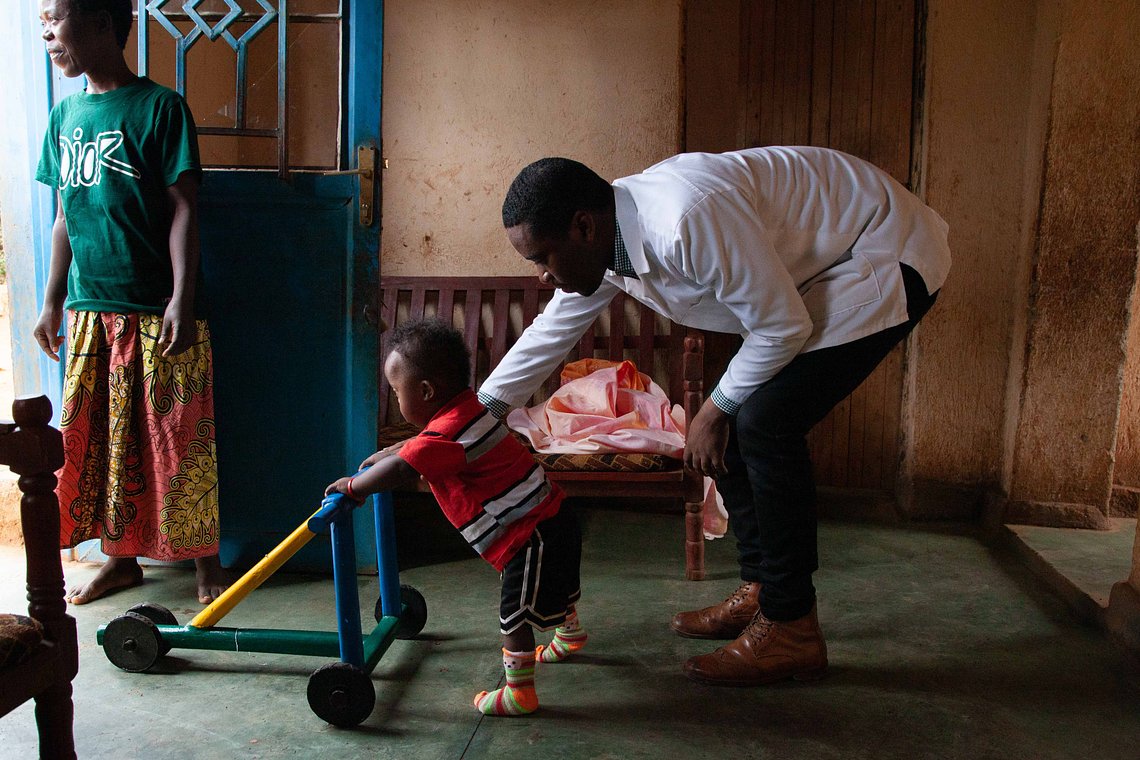
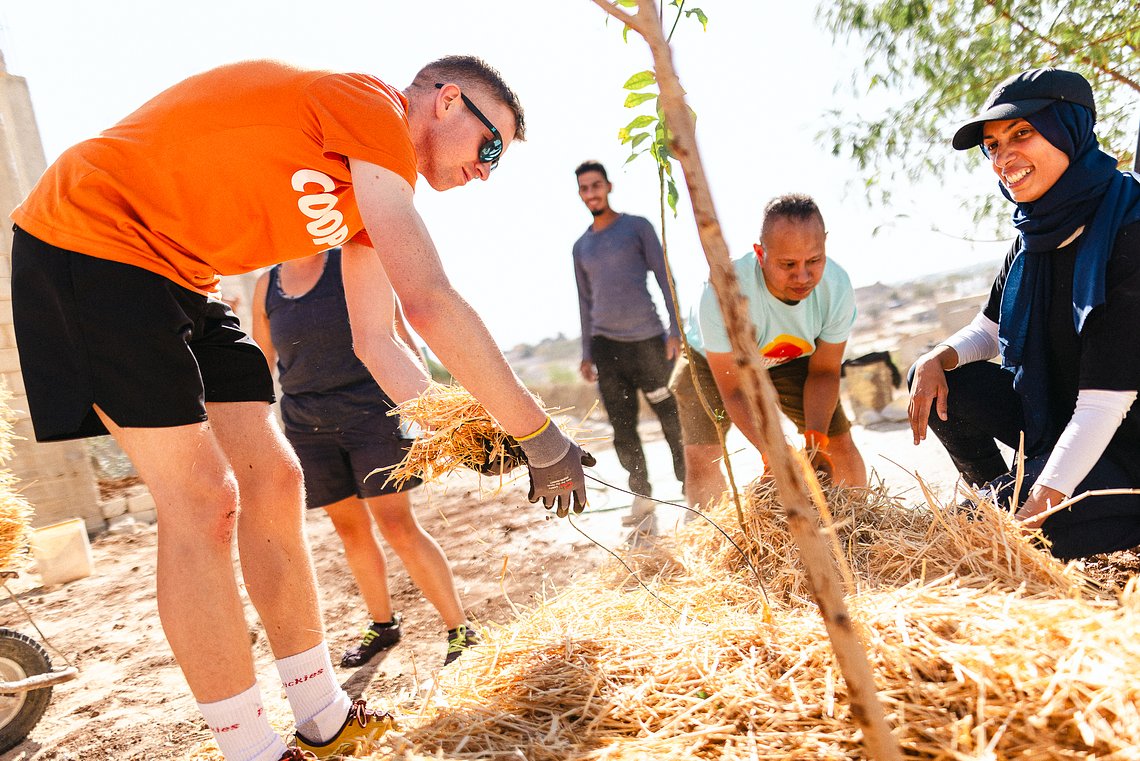
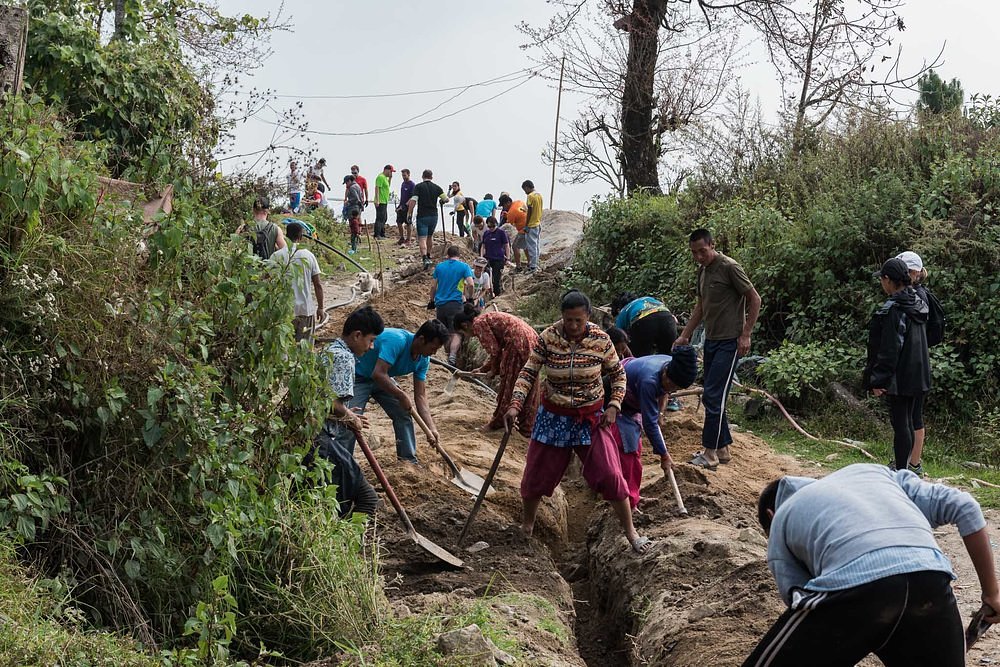
Impact Marathon Rwanda is not just a race. It is a week. Three days of volunteering with MAD4Africa at ASFA Physiotherapy Centre in Muganza, building a sensory garden for children living with disabilities. Wheelchair-accessible paths. Beds for aromatic herbs. Tactile surfaces. A shaded outdoor space where therapy can happen surrounded by things that engage the senses.
The team at ASFA: the physiotherapists, the nuns, the community, are extraordinary people doing extraordinary work in a place most of the world has never heard of. Your entry fee funds this project. Your hands help build it. And by the time you reach that start line, the race feels different because of it.
The bolt-on
After the race week, gorilla trekking is available as a bolt-on experience. Volcanoes National Park. Silverback families in the bamboo forest at over 3,000 metres. If you have ever wanted to do it, combining it with a week of running and volunteering in Rwanda is about as good an excuse as you will ever find.
The practical details
Dates: 8 – 14 June 2026 Distances: 10km / 21km / 42km
Accommodation: All-hotel, included in the price Price:£1,495 all-inclusive Deposit: 25% to secure your place, or split across four payments
Group size: Small group, founder-led, capped at a maximum of twelve runners
What is included: Flights are not included. Everything else- accommodation, meals, transfers, volunteering, race entry, medical cover, support- is included.
The week begins with a context day in Kigali, including the Genocide Memorial. Then south to Muganza for three days of volunteering. Then race day. Then, if you choose, gorilla trekking.
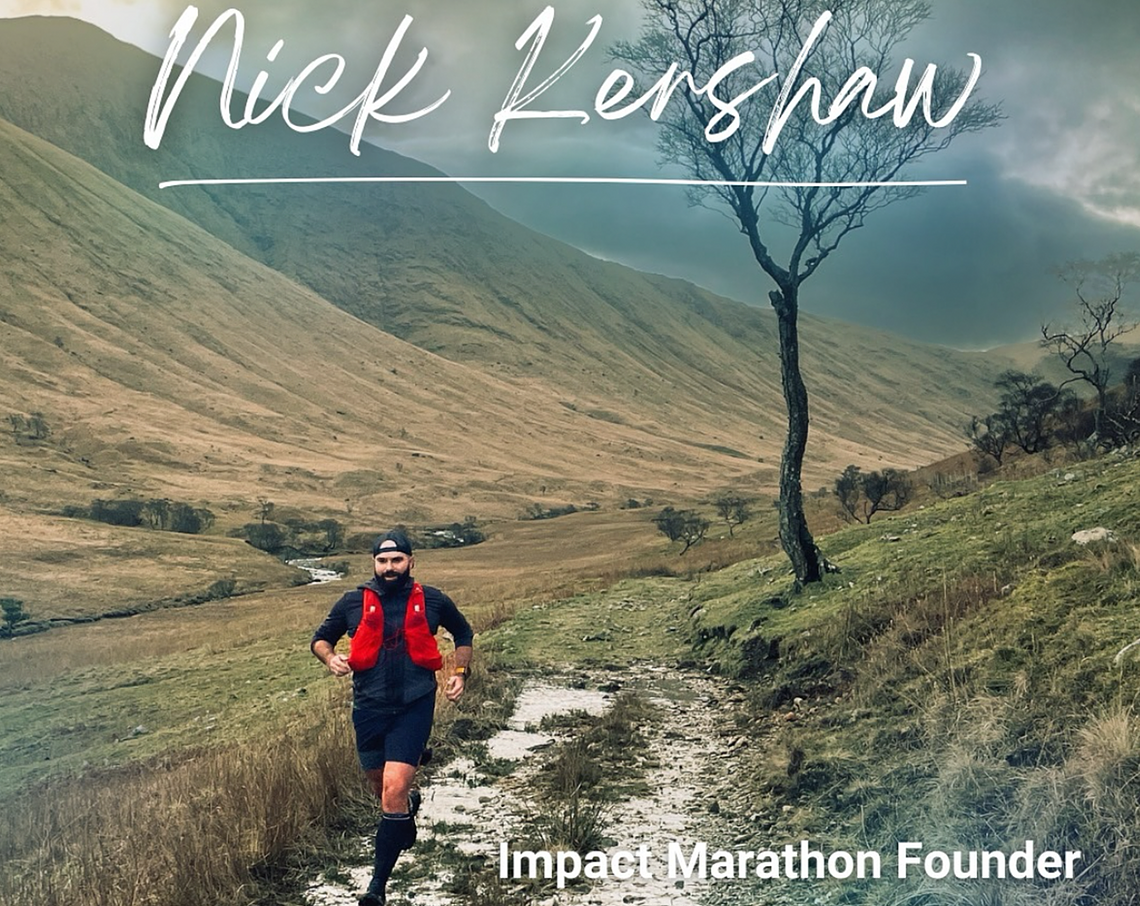
It is led personally by myself, Nick Kershaw. I am the founder of Impact Marathon and have been at all but two of the Impact Marathons we've built over the past 10 years. We have a small group, a single base, we eat every meal together. If you have questions about the route, the altitude, the project, or anything else, you can email nick@impactmarathon.com or reply to any of our emails. It goes straight to him.
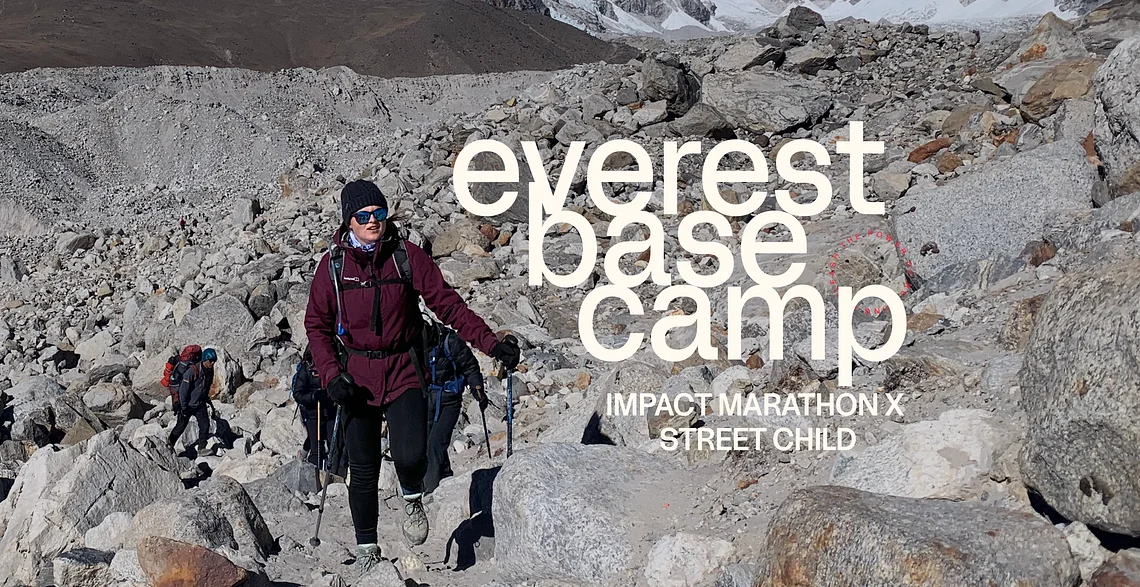
Impact Marathon Series runs small-group, founder-led running weeks in Rwanda, Nepal, Jordan, and Guatemala. Every week includes structured volunteering with community partners, trail racing, and cultural immersion. We publish where every pound goes.